
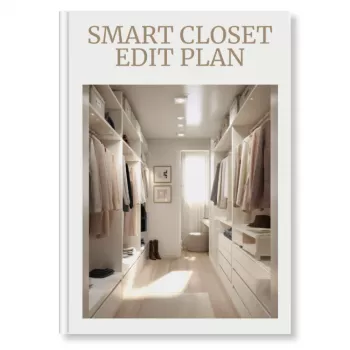
A closet reset works best when it follows a simple, non-dramatic system: decide what stays, what leaves, and what needs a second look—without second-guessing every item. The Smart Closet Edit Plan: Declutter Without Regret – Digital Checklist is designed to guide a thoughtful edit that protects favorite pieces, reduces clutter, and leaves a closet that’s easier to use every day.
Instead of forcing fast decisions, this approach uses short prompts, a buffer category for “not sure,” and a finishing pass that checks outfit versatility before anything exits the house.
This digital checklist is structured so you can edit in a focused session without turning your bedroom into a week-long sorting zone. It includes:
| Category | Why it clutters | Fastest decision rule | Suggested bin |
|---|---|---|---|
| Duplicates (same purpose) | Too many similar items hide the best one | Keep the most comfortable + most flattering; release the rest | Donate/Sell |
| Uncomfortable basics | Gets re-hung repeatedly but never worn | If it pinches/itches/slips, it goes | Donate/Recycling |
| “Almost fits” | Blocks space while waiting for a future body | If it won’t fit in the next 3 months, move it out of prime space | Unsure (boxed) |
| Occasion wear | Hard to evaluate day-to-day | Keep only what fits now and feels good; note missing accessories | Keep/Alter |
| Sentimental items | Emotion overrides function | Limit to a small memory capsule; photograph the rest if needed | Unsure (capsule) |
The fastest way to get a visible result is to edit one zone at a time. A single “complete” section beats an unfinished whole closet.
If you want an extra boost after decluttering, outfit planning can keep the momentum going. Pairing the edit with Chic Minimalism Formula | Meaningful Minimalism Outfit Recipe Checklist | Capsule Wardrobe, Outfit Planning, Style Vision Guide helps test combinations using what you actually kept.
Regret usually happens when items leave before they’ve been evaluated in context. This framework keeps you grounded in practical use, not mood or guilt.
For pieces that are “good on paper” but not in practice, comfort matters. Basics that feel easy to wear tend to earn the most repeats, whether it’s a simple top like a Women’s V-Neck Polo Shirt or a streamlined set you can actually move in like the 2-Piece Women’s Yoga Set – Strapless Sports Bra & High Waist Shorts.
When donating, take a minute to confirm the organization’s guidelines and be mindful about claims and solicitations. The Federal Trade Commission offers practical advice on giving to charity here: https://consumer.ftc.gov/articles/giving-charity.
Care also extends the life of what you keep. For straightforward clothing care best practices (washing, drying, and fabric basics), the American Cleaning Institute is a helpful reference: https://www.cleaninginstitute.org/.
Plan for 60–120 minutes per zone (like hanging tops or a single drawer). Starting small and using an “Unsure” bin keeps you from getting stuck on a few hard decisions.
That “in-between” feeling is common right after an edit because the clutter is gone but the outfits haven’t been tested yet. Do a quick outfit try-on session, write down true gaps, and pause shopping until you can see what’s actually missing.
Keep a small, intentional memory capsule with only the pieces that have a clear place or purpose. Photograph the rest if you want to preserve the story without keeping every item in daily closet space.











Leave a comment